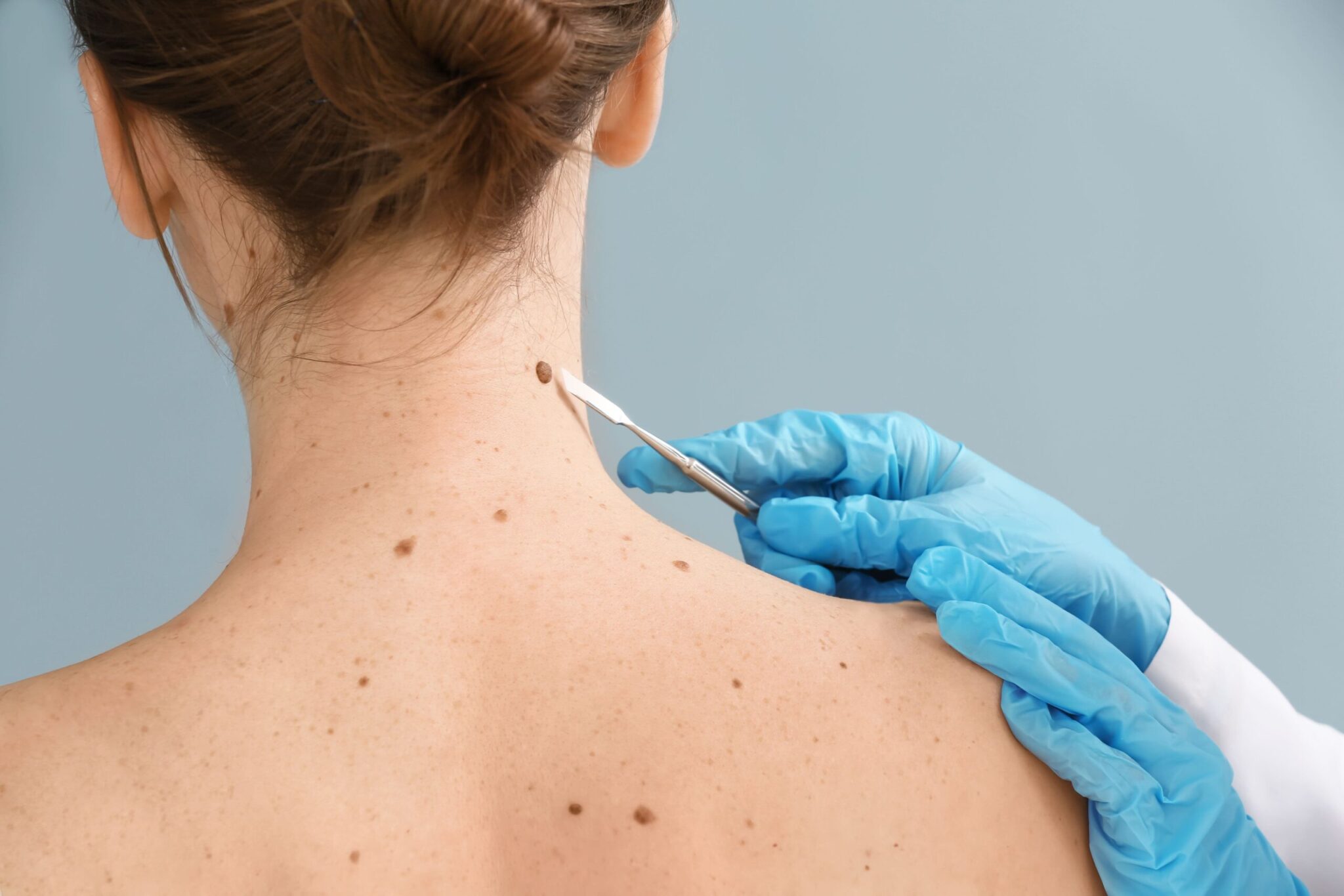

Skin cancer begins when abnormal cells develop in the skin, often after cumulative exposure to ultraviolet radiation. It’s one of the most common forms of cancer, and it can affect people of any age and skin tone. Skin cancer is not a single disease but a group of conditions that vary in appearance, growth patterns, and severity. Here’s information about the different types of skin cancer:
Basal Cell Carcinoma Skin Cancer
Basal cell carcinoma is the most common type of skin cancer; it starts in the basal cells, which are located in the lower part of the epidermis. This type often develops on areas that receive frequent sun exposure, such as the:
- Face
- Ears
- Neck
- Scalp
- Shoulders
- Arms
Basal cell carcinoma usually appears as a pearly bump, a flat flesh-colored patch, or a sore that heals and returns. It usually grows slowly, but it can extend into nearby tissue over time. It rarely behaves the same way, and its exact appearance differs based on skin tone and lesion location. Because it may look subtle at first, basal cell carcinoma is sometimes mistaken for a minor skin change rather than a lesion that needs medical review.
Squamous Cell Carcinoma Skin Cancer
Squamous cell carcinoma begins in the squamous cells, which make up much of the outer layer of the skin. Like basal cell carcinoma, it is often linked to long-term sun exposure, but it may also develop in areas affected by chronic irritation or previous skin injury. This type looks like a rough or scaly patch, a firm red bump, or an open sore. Squamous cell carcinoma is more likely to grow deeper into the skin, and that difference is why prompt medical assessment is invaluable. While basal cell carcinoma often appears shiny or translucent, squamous cell carcinoma more often has a crusted, thickened, or inflamed surface.
Melanoma Skin Cancer
Melanoma develops in melanocytes, the cells that produce pigment in the skin. Although it is less common than basal cell carcinoma and squamous cell carcinoma, it warrants close attention due to its potential to spread. Melanoma commonly arises in an existing mole, or it may appear as a new dark spot elsewhere.
Dermatologists often look for changes in the size, shape, border, color, or symmetry of moles or lesions when evaluating for possible melanoma. Some lesions are dark brown or black, but others can appear:
- Tan
- Pink
- Red
- Skin-colored
Melanoma often develops on sun-exposed skin, but it may also appear in areas that receive little sun.
Surgical Treatments
Surgical treatment is a common dermatologic option for melanoma. Depending on the lesion and the clinical findings, a dermatologist may remove the lesion along with a margin of surrounding tissue. The goal of surgery is to remove the visible cancer, and the tissue is then analyzed for diagnostic information. Lab testing helps determine whether other treatments need to be explored after surgery. Mohs surgery is a common skin cancer treatment that takes longer than excision, but it confirms the removal of cancer cells.
Non-Surgical Treatments
Non-surgical treatment options may be part of melanoma care in selected cases. These approaches can include systemic therapies or other medically directed treatments, depending on the stage and clinical picture. A dermatologist often coordinates care with other specialists, and the treatment plan may involve more than one method. The right approach depends on pathology findings, lesion depth, and the patient’s overall evaluation.
Get Your Skin Health Assessed
Changes in the skin can be easy to overlook, but they should not be ignored. A spot that looks new, changes over time, or does not heal needs attention from a qualified professional. Skin cancers commonly differ in appearance and behavior, so self-observation alone is not enough for accurate identification. A dermatologist can examine suspicious lesions, compare patterns across the skin, and determine whether further testing is needed. To learn about your skin health, schedule a consultation with a dermatologist today.