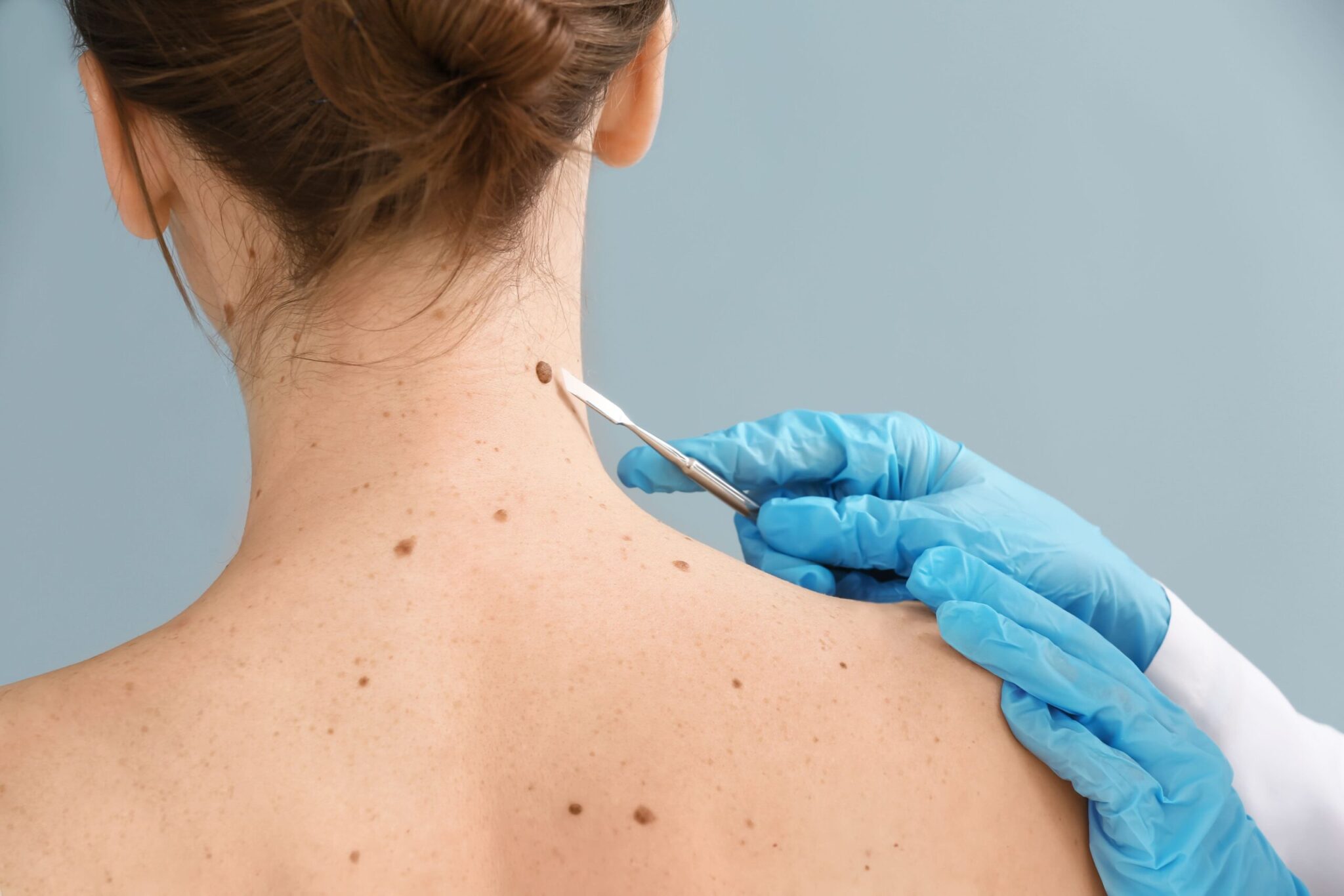

Mohs skin cancer surgery treats certain skin cancers with step-by-step tissue removal, and doctors review each layer during the visit. This method targets visible and microscopic cancer. Since high-risk cases may have unclear edges or appear in delicate areas, Mohs surgery gives the care team detailed margin control. This is how it removes cancerous tissue, preserves healthy skin, uses a minimally invasive approach, and supports outcome planning:
Removing Cancerous Tissue
Doctors use Mohs skin cancer surgery to remove thin layers of tissue, and they examine each layer under a microscope. The process repeats only where cancer cells remain. Since high-risk tumors may spread beyond what the eye sees, this mapping process gives a precise view of tumor borders. It also helps guide the next stage of removal.
High-risk patients include people with recurrent tumors, and they may also include those with aggressive cell patterns. Typical examples include:
- Tumors on the nose, ears, lips, or eyelids
- Cancers with poorly defined edges
- Lesions that returned after earlier treatment
When these factors appear, standard excision may remove either too little tissue or more tissue than needed. Mohs surgery addresses that issue, and it does so in stages. Since each stage uses immediate slide review, the surgeon makes decisions based on current findings rather than estimates.
Preserving Healthy Skin
Mohs surgery removes small layers one at a time, but it leaves nearby tissue in place until testing shows cancer. This matters in areas with limited spare skin. Since many high-risk tumors form on the face, tissue preservation affects both function and reconstruction planning. That makes the technique useful when structure and movement matter. A smaller defect may simplify wound repair, and it may also reduce the size of a flap or graft.
Providing Minimally Invasive Technique
Mohs surgery takes place under local anesthesia, and most patients stay awake throughout the visit. The surgeon numbs the treatment area. Since the procedure targets only mapped tissue, it avoids a wider removal pattern at the start. That focused approach keeps the treatment localized.
Patients typically move through short treatment stages, and each stage includes removal, lab review, and discussion. A visit may last several hours. Since tissue analysis happens on site, patients receive same-day information about whether cancer remains. That structure reduces guesswork during treatment.
Before the procedure, patients typically receive simple instructions, and these help the day run more smoothly. These include:
- Eat a normal meal unless told otherwise
- Wear comfortable clothing
- Bring a medication list
Improving Outcomes
For high-risk patients, outcome planning involves more than tumor removal, and doctors look at recurrence risk, location, and repair needs. Mohs surgery supports that review. As the surgeon checks tissue margins during the procedure, the final wound reflects verified findings rather than a broad estimate. That information can help with repair decisions and follow-up planning.
Some patients need closer surveillance after surgery, and follow-up visits track healing and watch for new lesions. Skin cancer may return or develop in other areas. When a patient has prior skin cancer, sun damage, or immune suppression, long-term monitoring becomes part of care. Clear records from Mohs mapping also support future treatment decisions.
Schedule Mohs Skin Cancer Surgery
Mohs skin cancer surgery gives high-risk patients a precise treatment method, and it pairs tissue removal with immediate microscopic review. The process removes cancer in stages. As high-risk tumors need careful margin control and thoughtful repair planning, this approach plays a defined role in treatment. If your doctor recommends Mohs surgery, schedule a consultation to review the tumor site, treatment steps, and follow-up plan.