
Missing teeth affect the aesthetics of your smile, and they can also make everyday chewing and speaking more difficult. Dental implants are a reliable solution for missing teeth. They restore both function and appearance for many patients. Here is more information about how the implant process works:
Understanding Dental Implants
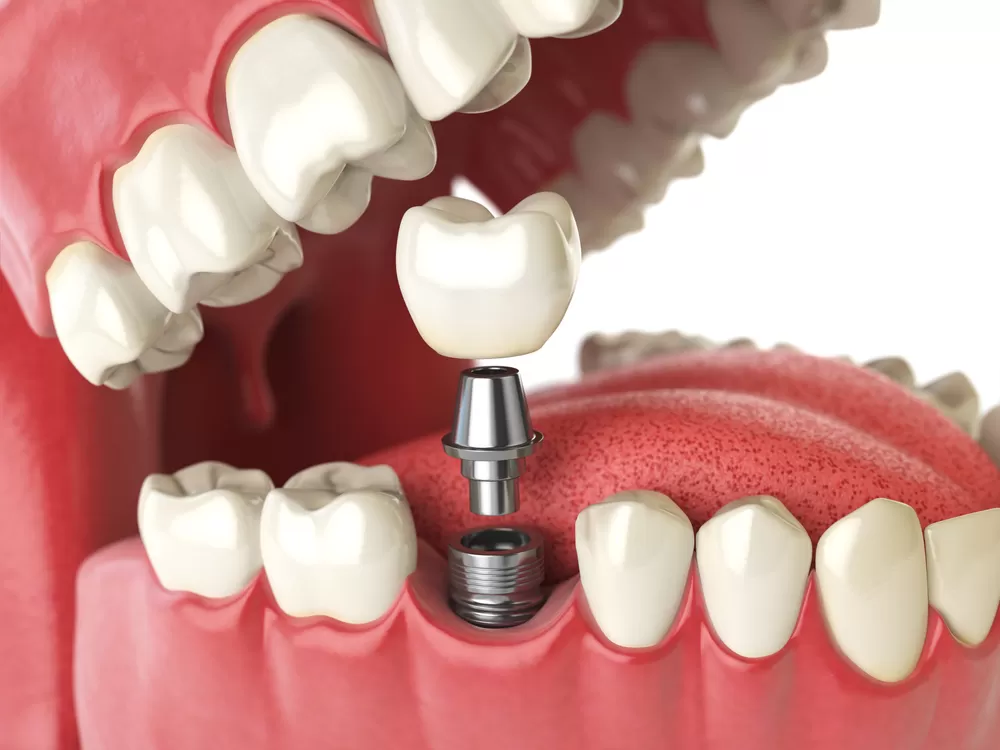
Dental implants are artificial tooth roots, and they support replacement teeth that look and feel like natural teeth. The process begins with a consultation. Your provider examines your mouth to confirm you are a suitable candidate. An implant has three parts that work together to recreate a full tooth.
Here is an explanation of the parts that make up a dental implant:
- Post: a titanium screw that acts as the tooth root and fuses with your jawbone.
- Abutment: a connector that attaches to the post and holds the crown in place.
- Crown: the visible portion that is shaped and colored to match your natural teeth.
The full timeline varies, but most patients complete treatment within three to nine months. The post needs time to fuse with the bone through a process called osseointegration. Once the bone has healed, your provider attaches the abutment and crown, and your new tooth is ready for use.
Replacing a Single Tooth
A single missing tooth can be replaced with one implant. The dentist works to blend the implant with any surrounding teeth. Your provider places the post into the jaw where the tooth is absent. Because the implant stands on its own, it does not rely on neighboring teeth for support. This protects your healthy teeth, and it keeps your jawbone stimulated and strong.
Restoring Multiple Teeth
When several teeth are missing, implants can be combined with crowns to fill the gaps. Your provider may place two or more posts, and these support individual crowns or a small fixed restoration. The approach depends on how many teeth are gone, and it depends on where they are located in the mouth.
Implant-supported restorations stay firmly in place, and they do not slip the way removable options sometimes do. Patients can chew comfortably. When they speak, they may speak more clearly without the dental restoration moving.
Anchoring a Full Denture
When implants support a denture to replace an entire row of teeth, the implants serve as sturdy anchors for the prosthetic. Rather than placing one implant per tooth, your provider positions four posts at strategic points, and the denture attaches securely to them. This method, called All-on-4, restores a full arch. It uses fewer implants than replacing each tooth individually.
The benefits of an implant-supported denture include:
- A stable bite with no dietary restrictions.
- Preserved jawbone density across the arch.
- A natural appearance that supports facial structure.
Patients maintain their restoration with regular brushing and routine dental visits.
Learn More About Dental Implants
Dental implants restore missing teeth, and they work for a single gap, several teeth, or a full row with a denture. Each complete implant uses a post, an abutment, and a crown, and the process spans months while the bone heals. Sometimes the jawbone is not stable or healthy enough for dental implants, but the dental professional can perform a bone graft to prepare it for treatment. If you want to learn more about dental implants, consult a dental provider near you.