

Musculoskeletal ultrasound uses high-frequency sound waves to create real-time images of muscles, tendons, ligaments, and joints. Because it uses no radiation, it is a safer alternative to other imaging methods, and physicians may recommend it as a first-line diagnostic tool. The scan is painless and non-invasive. Doctors use it to identify tears, inflammation, and fluid buildup, which makes it particularly effective for evaluating soft tissue injuries. Here is more information on how ultrasound helps diagnose musculoskeletal injuries:
What Are Musculoskeletal Injuries?
When musculoskeletal injuries occur, they affect the muscles, bones, tendons, ligaments, and nerves that enable the body to move. These injuries result from sudden trauma, such as a fall or collision, or they develop gradually through repetitive strain. They are common. Athletes, manual laborers, and older adults may face a higher risk.
Symptoms typically include localized pain, swelling, reduced range of motion, and muscle weakness. While some injuries resolve within days, others require medical intervention. Without appropriate treatment, long-term structural damage may occur; identifying the exact cause of symptoms determines the most effective treatment approach for a given patient. Ultrasound technology helps diagnose the condition accurately.
What Are the Different Types?
Musculoskeletal injuries fall into several distinct categories, each affecting different tissue structures:
- Sprains and strains: Sprains involve stretched or torn ligaments, while strains affect muscles or tendons.
- Tendinopathy: Chronic irritation or degeneration of a tendon, common in the shoulder, elbow, and Achilles region.
- Bursitis: Inflammation of the fluid-filled sacs that cushion joints.
- Fractures: Breaks in bone tissue caused by trauma or repetitive stress.
How Are They Diagnosed?
Diagnosis begins with a clinical history and physical examination; a physician assesses the location, severity, and onset of pain. They then test joint stability and muscle strength, which helps them establish a preliminary understanding of the injury. This initial evaluation narrows down the likely cause, but it rarely confirms a diagnosis with certainty. Imaging technologies fill that diagnostic gap, and each modality offers distinct capabilities. Ultrasound provides immediate, dynamic imaging that allows a clinician to observe tissue movement in real time, making it particularly useful for detecting tears, fluid accumulation, and inflammation as they occur during motion.
What Does an Ultrasound Involve?
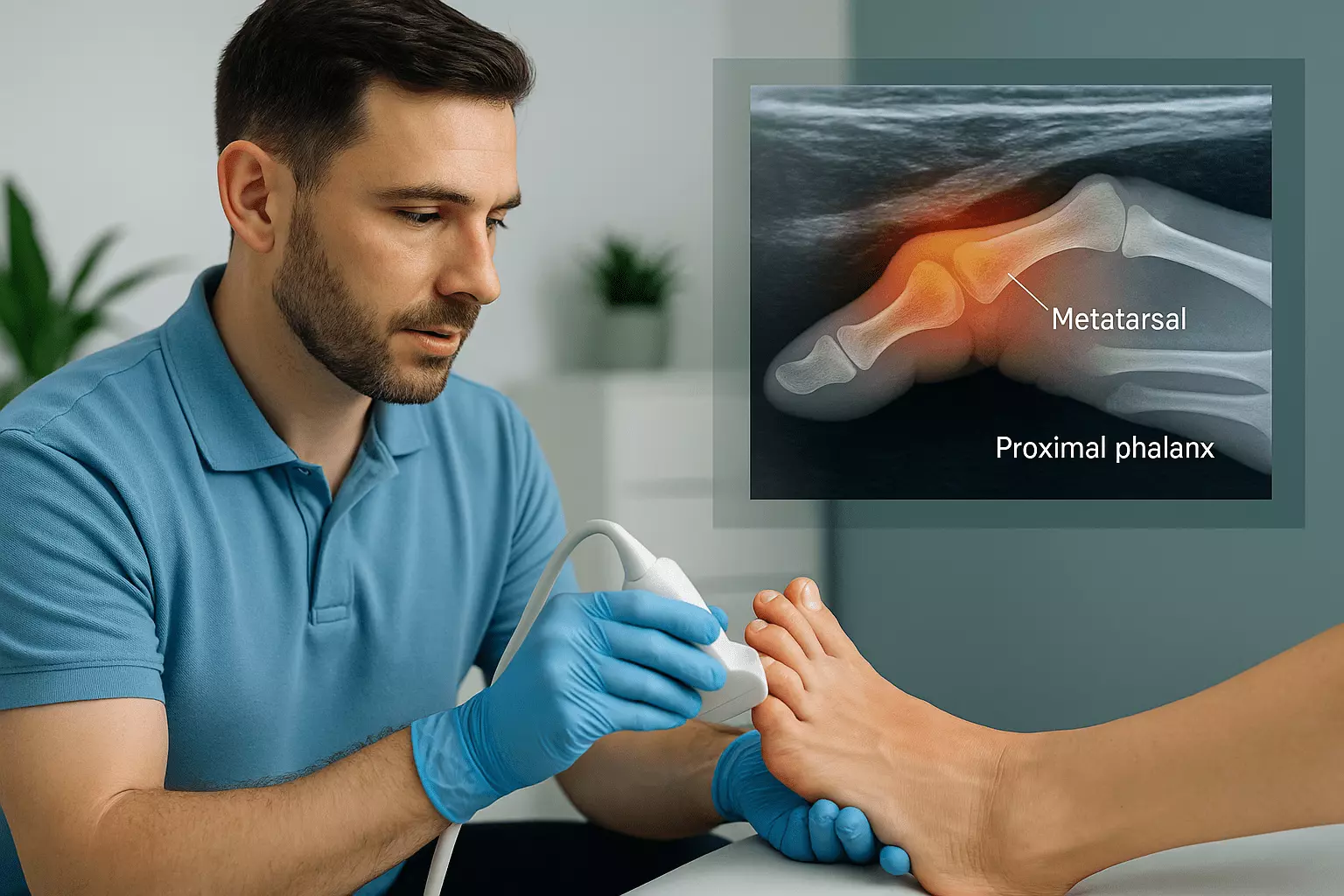
A musculoskeletal ultrasound uses a handheld transducer to send sound waves into the body, and these waves bounce off tissue structures and return as echoes. A computer translates the echoes into a live image on screen. To improve sound wave transmission, the technician applies a small amount of gel to the skin before the scan begins.
Patients may remain fully clothed except for the area being examined. No sedation or preparation is required beforehand, which makes the procedure accessible to most patients. The technician may ask the patient to move the affected joint during the scan, and this allows the physician to observe tendons and ligaments in motion rather than at rest. Most scans take about 30 minutes.
Because the procedure involves no radiation, it can be repeated as often as clinically necessary. This makes ultrasound particularly valuable for monitoring healing progress, and it is useful for tracking chronic conditions over time. Repeated imaging carries no cumulative risk to the patient.
Seek Professional Care Now
Musculoskeletal injuries range from minor strains to severe tears, and accurate diagnosis determines the right course of treatment. Ultrasound offers a fast, radiation-free way to visualize soft tissue damage in real time, giving physicians clear insight into conditions a physical exam alone cannot confirm. If pain, swelling, or reduced mobility persists beyond a few days, schedule an evaluation with a musculoskeletal specialist. Early diagnosis through ultrasound imaging can reduce the risk of long-term complications.