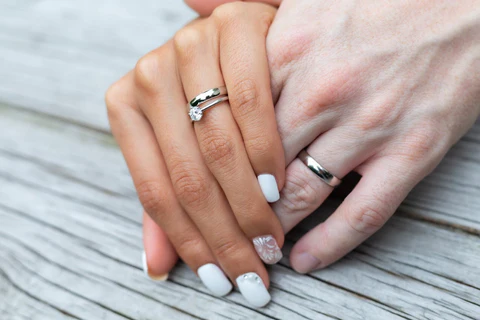

The metal used in an engagement ring plays a key role alongside the gemstone, influencing the ring’s appearance, weight, and durability. It also affects how the ring should be cared for over time, since some metals benefit from regular polishing while others are more resistant to scratches. Personal factors such as skin sensitivity, daily wear habits, and preferred finish also help guide the choice of metal. Here is more information to help you choose the ideal material for engagement rings:
Platinum Metal Options
This metal often serves as a foundation for many types of wedding bands, including eternity, anniversary, and both men’s and women’s bands. It pairs well with a wide range of engagement ring styles; common configurations include solitaire and three-stone designs. The structure of the metal supports both simple and intricate settings, which gives it broad design flexibility.
Platinum often pairs with a wide range of gemstones. Common cuts used with platinum settings include round, princess, emerald, asscher, radiant, and oval, and both natural and lab-grown loose diamonds appear in these designs. It also supports additional shapes such as marquise and pear. The metal holds these stones securely, making it suitable for a variety of jewelry designs.
Gold Metal Options
Gold is widely used in engagement rings because it combines durability with strong workability, which supports detailed craftsmanship and long-term wear. It is an alloyed metal, meaning it is mixed with other metals such as copper, silver, nickel, or palladium to achieve different colors and hardness levels. This structure allows gold to be used daily while maintaining a refined appearance over time.
In engagement ring design, gold is commonly selected in different purity levels, such as 14k and 18k. Fourteen-karat gold contains a higher proportion of alloy metals, which increases hardness and scratch resistance, making it well-suited for frequent daily wear. Eighteen-karat gold contains a higher percentage of pure gold, which produces a richer color and softer structure. These differences affect how the ring feels on the hand, how it wears over time, and how often maintenance becomes necessary.
Gold also behaves differently depending on its color. Yellow gold maintains a warm tone that closely reflects the natural color of gold; white gold is alloyed and typically finished with rhodium plating to create a brighter, silvery appearance. Rose gold includes copper in its alloy composition, which produces a pinkish hue and, in many formulations, increases hardness compared to yellow gold. These variations give gold a broad design range without changing the core material.
Titanium Metal Options
Titanium is a lightweight metal commonly used in engagement ring design because of its high strength-to-weight ratio and resistance to corrosion. It is harder than traditional precious metals, which makes it suitable for rings intended for frequent daily wear. The material does not tarnish under normal conditions, and it maintains a consistent appearance over time with minimal surface maintenance. Titanium is often chosen for its modern look and comfortable feel, especially in wider band styles.
Explore Unique Engagement Rings Today
Understanding the maintenance process required for your selected metal helps keep it in good shape. Common maintenance options include cleaning and inspection, ring resizing, and tip and prong repair. Some jewelers also offer services such as jewelry restoration and remounting. Contact a reputable jewelry shop to explore their available engagement rings.