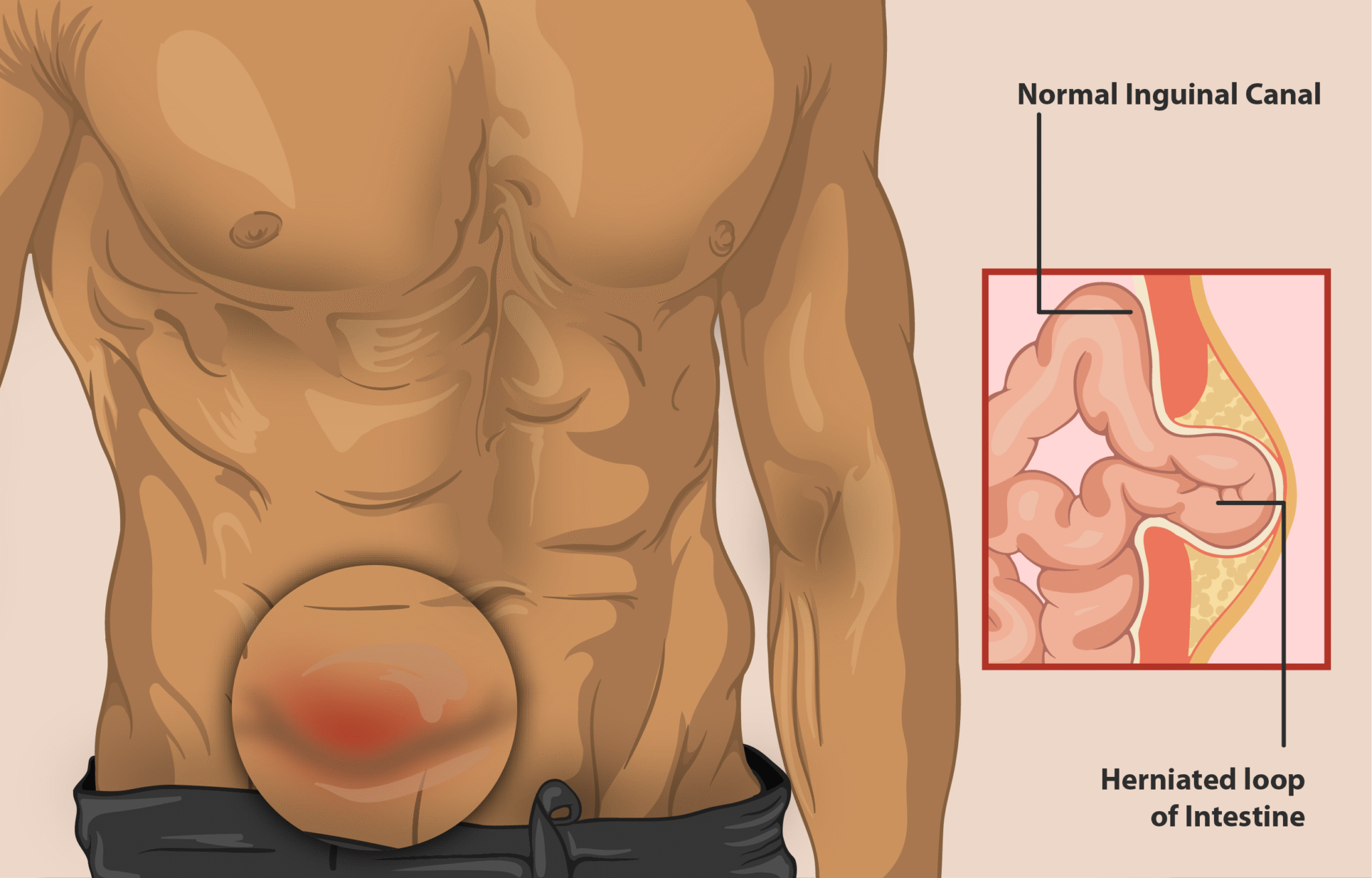

A hernia occurs when an organ pushes through a weak spot in muscle or tissue. You may notice a bulge, and it will cause discomfort during activity. Since hernias come in several forms, knowing your type helps you understand treatment options.
Common Inguinal Groin Hernias
Inguinal hernias form in the groin area. They develop when tissue pushes through the lower abdominal wall. You might have a bulge near the groin, and it sometimes gets bigger when you cough or lift. The bulge sometimes flattens when you lie down, but it often returns when you stand. Some people have pressure or aching, while others notice few symptoms early on. Small inguinal hernias sometimes need only watchful waiting, with regular exams and ongoing monitoring. Your doctor tracks any changes, and this approach suits hernias that stay small and cause little discomfort.
Larger or growing hernias often require repair, so your surgeon may suggest minimally invasive surgery, like laparoscopic or robotic techniques. These methods use small incisions and support shorter recovery times with less scarring. Open repair remains available, and your surgeon may choose it for complex cases. Mesh implants add support during these procedures and help lower the chance of recurrence. A physical exam usually confirms the diagnosis, and your provider orders imaging when results are unclear. Once confirmed, your surgeon explains each option. You can choose the approach that fits your needs.
Hidden Femoral Thigh Hernias
You may notice a small bulge in the upper thigh, which is hard to spot at first. Some people have discomfort when standing or lifting. Others have few symptoms, so each plan will be different. Here are the key points to keep in mind:
- A physical exam confirms the diagnosis, and diagnostic imaging adds detail when the bulge is small.
- Minimally invasive methods, such as laparoscopic or robotic-assisted techniques, use small incisions, shorten recovery times, and reduce scarring.
- Open repair remains an option when your case is complex.
- Mesh implants can strengthen the repair and help reduce the chance of recurrence after surgery.
Common Abdominal Wall Hernias
Abdominal hernias form along the abdominal wall, so you might notice a bulge near the navel. The bulge sometimes grows when you cough or lift, and it can fade when you rest. Some people have mild pressure, while others report aching during activity. Small abdominal hernias sometimes allow watchful waiting, which pairs routine physical exams with steady monitoring. Your doctor tracks any changes over time, and this approach suits hernias that stay stable and cause little discomfort. Open repair stays available when your case is complex, and your surgeon weighs each method against your needs. A physical exam usually confirms the diagnosis, and your provider may order diagnostic imaging when the picture is unclear. Once your hernia is confirmed, your surgeon explains each option. You can choose a plan that fits your goals.
Right Next Step Forward
Each hernia type has distinct features and treatment paths. A physical exam helps confirm your diagnosis, while diagnostic imaging can guide the plan. Small hernias may suit watchful waiting, while others benefit from surgical repair with mesh. Schedule a consultation today, and you will receive guidance for your situation.