
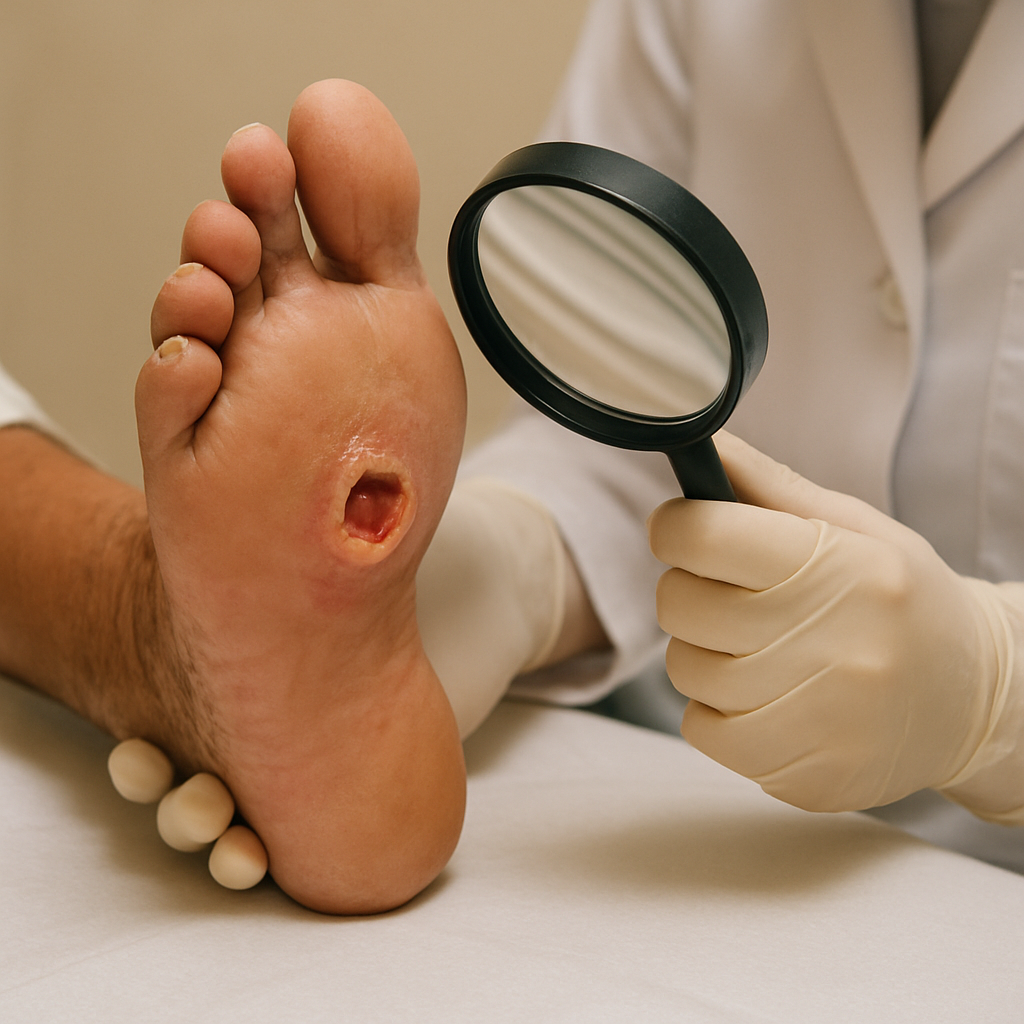

Regular foot exams are part of diabetic foot care and help healthcare providers evaluate changes in skin health, sensation, and circulation. Diabetes-related nerve and blood vessel changes are able to increase the risk of foot ulcers, making routine monitoring a part of ongoing care. Professional foot evaluations and daily self-checks help identify concerns early and support timely treatment when needed. Here is more information about the role of regular foot exams in diabetic wound care:
Understanding Diabetes Foot Complications
Diabetes will sometimes affect the nerves and blood vessels that support foot health. Peripheral neuropathy may reduce sensation in the feet, while circulation changes are able to affect the body’s ability to respond to injuries. These factors will sometimes increase the risk of developing wounds, including diabetic foot ulcers, when small injuries go unnoticed or require additional care.
Foot complications may begin with minor skin damage, pressure areas, or irritation that are difficult to detect without regular monitoring. Healthcare providers evaluate foot health through examinations that assess skin condition, sensation, and circulation. Early identification of changes allows providers to recommend appropriate care based on each patient’s needs and overall health.
Evaluating Foot Exam Findings
A diabetic foot exam evaluates more than the visible surface of the feet. Healthcare providers assess several areas that may be affected by diabetes-related changes, including:
- Skin condition: Checks for dryness, cracks, calluses, blisters, or open areas.
- Nail health: Evaluates concerns such as ingrown nails, fungal changes, or thickened nails.
- Foot sensation: Uses testing methods to assess nerve function and changes in feeling.
- Circulation: Reviews blood flow indicators, including pulses and skin temperature.
- Foot structure: Identifies changes such as hammertoes or bunions that may affect pressure distribution.
These evaluations help healthcare providers identify changes that may require additional attention. Regular foot exams allow providers to monitor foot health and recommend care based on each patient’s condition and risk factors.
Recognizing Early Wound Changes
Early detection plays a role in the management of diabetic foot ulcers. Identifying changes in the feet before a wound becomes more advanced allows healthcare providers to evaluate the condition and recommend appropriate care.
When a foot concern is found early, treatment options may include addressing pressure points, supporting circulation, and managing factors that affect healing. A healthcare provider develops a care plan based on the wound characteristics, overall health, and individual needs of the patient.
Delayed evaluation may allow foot wounds to become more complex and require additional treatment. Regular foot exams help monitor changes in skin health, sensation, and circulation. This ongoing assessment allows providers to identify concerns and discuss care options before complications progress.
Exploring Diabetic Wound Treatments
Diabetic wound care is tailored to the wound’s condition, cause, and the patient’s overall health. Treatment options may include debridement and compression therapy and negative pressure wound therapy, as well as total contact casting or advanced wound care approaches when appropriate. Offloading techniques help reduce pressure on the wound, while regular foot exams provide information that guides treatment decisions.
Schedule Your Diabetic Wound Care Appointment
Regular foot exams are part of diabetic wound care and help identify changes in foot health early. These evaluations allow healthcare providers to assess concerns, guide treatment decisions, and monitor conditions that may affect healing. Daily self-checks and routine professional exams support ongoing foot care for people with diabetes. Schedule an appointment with a wound care specialist to discuss your foot health and available care options.